From pasture to plate: planning a farm dinner in Indiana
Could the cattle you raise become a meal you serve to your community? Explore the potential legal route and the practical decisions behind a first farm dinner.
Indiana, United States · Sources checked
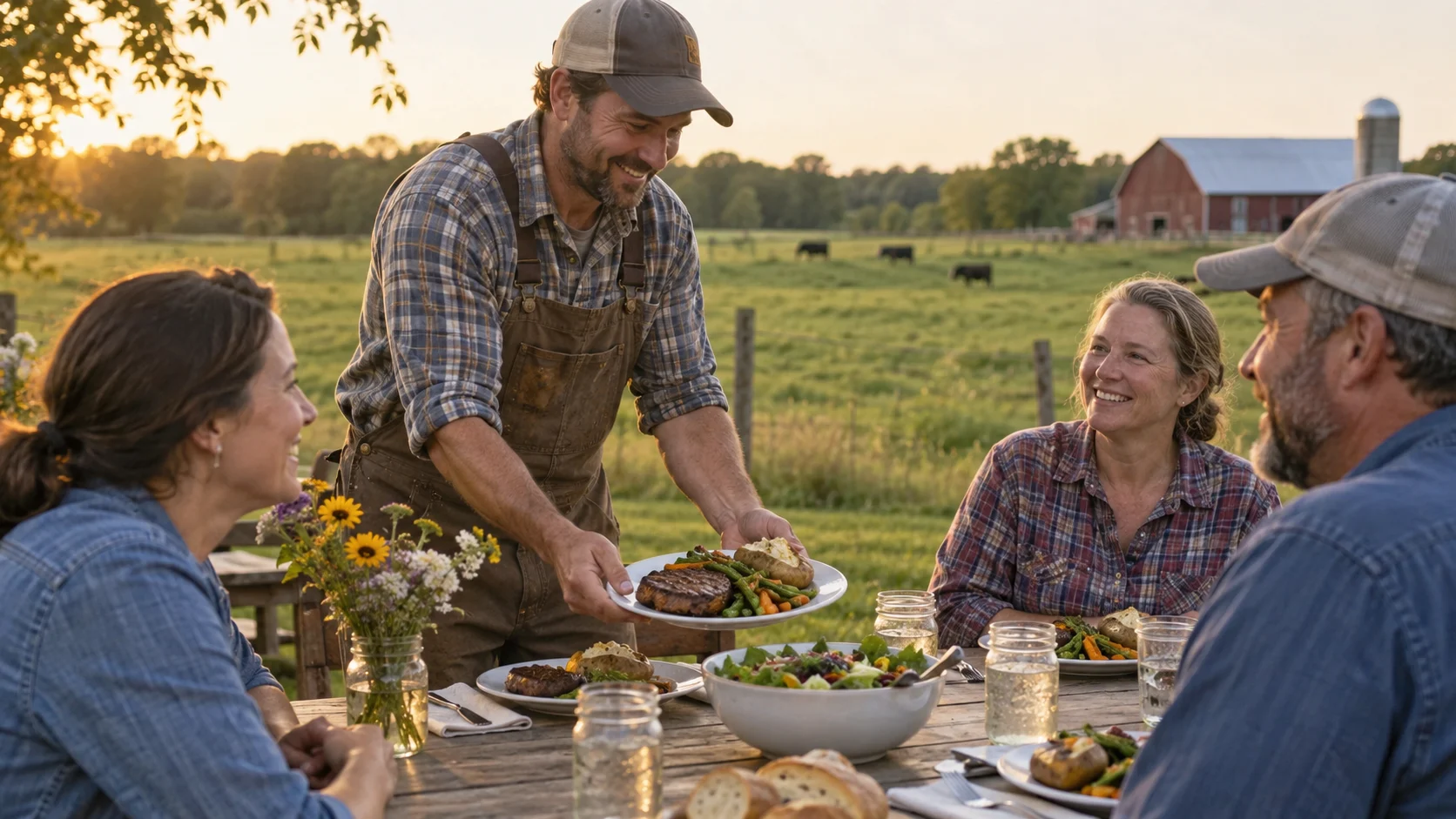
You have put months of work into raising cattle. A customer buying a cut of beef sees one part of that work. A dinner at the farm could give them a fuller connection: the place, the people and the food on the plate.
For an Indiana farmer, that is an idea worth investigating. Our reading of the state’s producer rules and the federal meal-preparation exemption suggests a potential route for qualifying farms to sell hot meals made with their own beef. The details of the operation determine whether that route fits.
Where the opportunity begins
Indiana’s 2026 framework includes prepared foods sold directly by qualifying homestead and small-farm producers. Its meat provision requires animals raised on the qualifying property and lawful slaughter, processing and labeling. It does not require slaughter at that property. Read the enacted law, especially IC 16-42-5.4 §§5–6.
Federal rules provide a separate restaurant exemption for qualifying preparation and service of meals using inspected meat. Cooking can fall within it; slaughter cannot. See 9 CFR 303.1(d).
Read together, these provisions make a farm dinner a possibility to work through with the relevant agencies. They do not establish that every farm kitchen or service arrangement qualifies. A written answer about your actual operation is more useful than a general yes or no about “selling hot food.”
Describe the dinner before asking about the rules
Put the proposed operation on one page. Explain where the cattle are raised, who will slaughter and pack the beef, where cooking will happen, and how a customer will receive the meal. Be specific about the menu and any ingredients brought in from elsewhere.
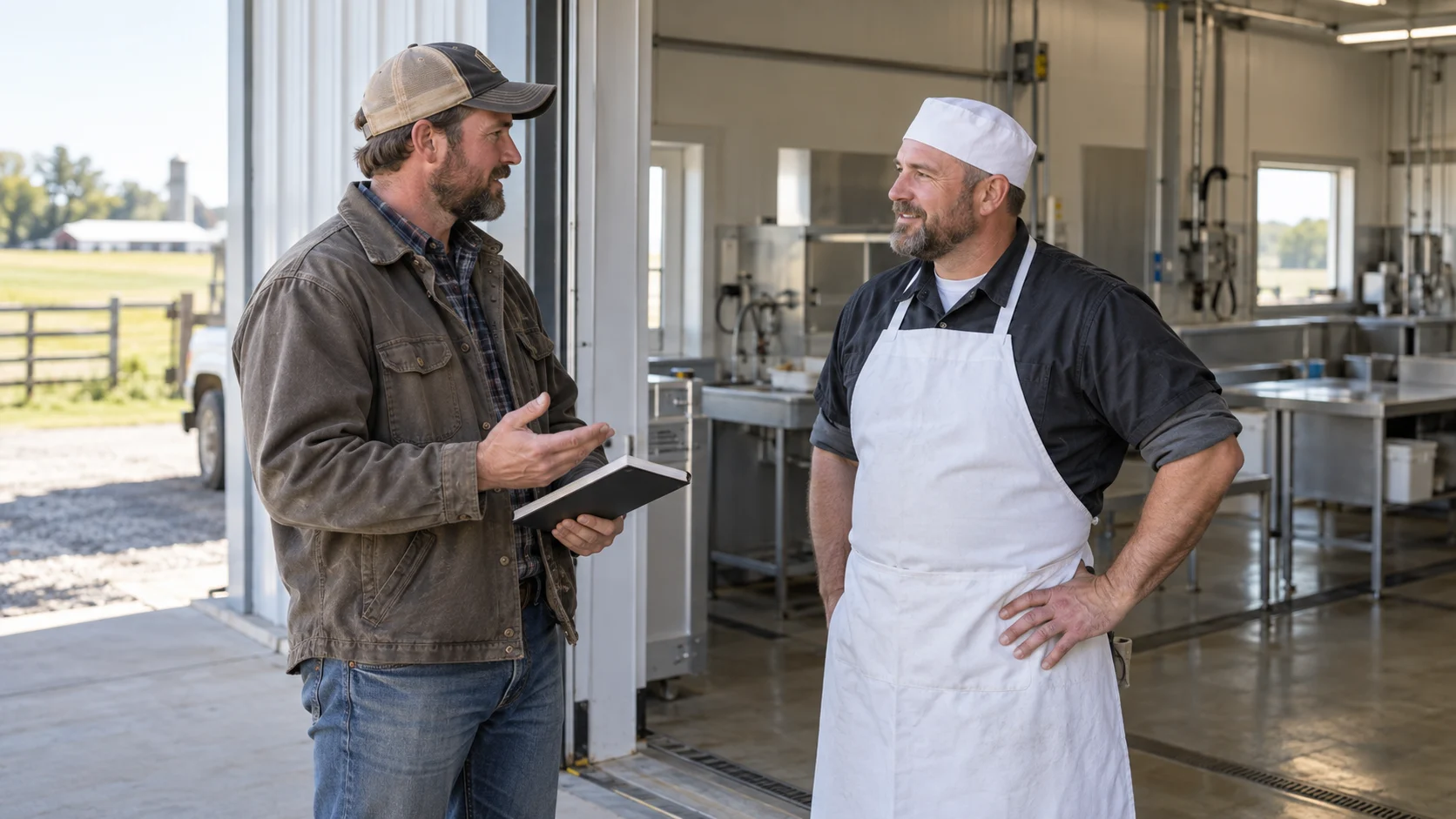
Send that description to Indiana’s Board of Animal Health for the meat questions and the Department of Health’s Food Protection Division for the producer and food-service questions. Ask which provisions apply to the meal, which documents demonstrate eligibility, and whether the intended kitchen and service arrangements meet them.
For your first inquiry, choose one service arrangement. Eating at the farm, collecting a packed meal and receiving a delivery each introduce different facts. A clear example gives the agency something concrete to assess.
IDOH guidance includes packaging-before-transport requirements and restrictions on handling food after packaging. Confirm their application before planning market cooking, reheating or delivery. Read the May 2026 guidance, page 7.
Make the first dinner manageable
Once the operation is confirmed, plan a menu around what your team and space can reliably handle. Work out portions, preparation time, cooking and holding capacity, and the pace at which orders can be handed over or served.
For a seated dinner, consider how guests will arrive and move through the space, what happens if the weather changes, and who will answer their questions while the kitchen is busy. For collection, give customers a clear arrival window and make the handover easy to understand.
Write a cost plan before choosing the price. Include the beef, processing, other ingredients, labor, packaging or table service, cleanup and payment costs. Leave room for the less visible work as well as the meal itself.
Tell the story that belongs to your farm
You do not need an elaborate story to make the dinner feel personal. Tell guests who raised the cattle, what a season on your farm looks like, and what you have chosen to serve. Use photographs and details from the actual place.
If some ingredients come from another producer, introduce that contribution accurately. A clear account of who did what gives customers a richer understanding of the meal and the people behind it.
A first dinner can be small enough to learn from and meaningful enough to bring people back. That is the opportunity to explore: food raised with care, a meal served well, and a closer relationship with the people who eat it.
For the processing conversation, read Before you book the butcher: meat processing for Indiana farms. For the broader producer rules, start with our Indiana home-kitchen and food-business guide.
Sources checked October 5, 2026. The combined farm-meal route discussed here is an interpretation of the cited provisions; eligibility for a particular farm and service arrangement remains to be confirmed.