Before you book the butcher: meat processing for Indiana farms
The right processing service depends on what you plan to do with the meat. Understand inspected and custom-exempt processing, then ask the questions that fit your farm.
Indiana, United States · Sources checked
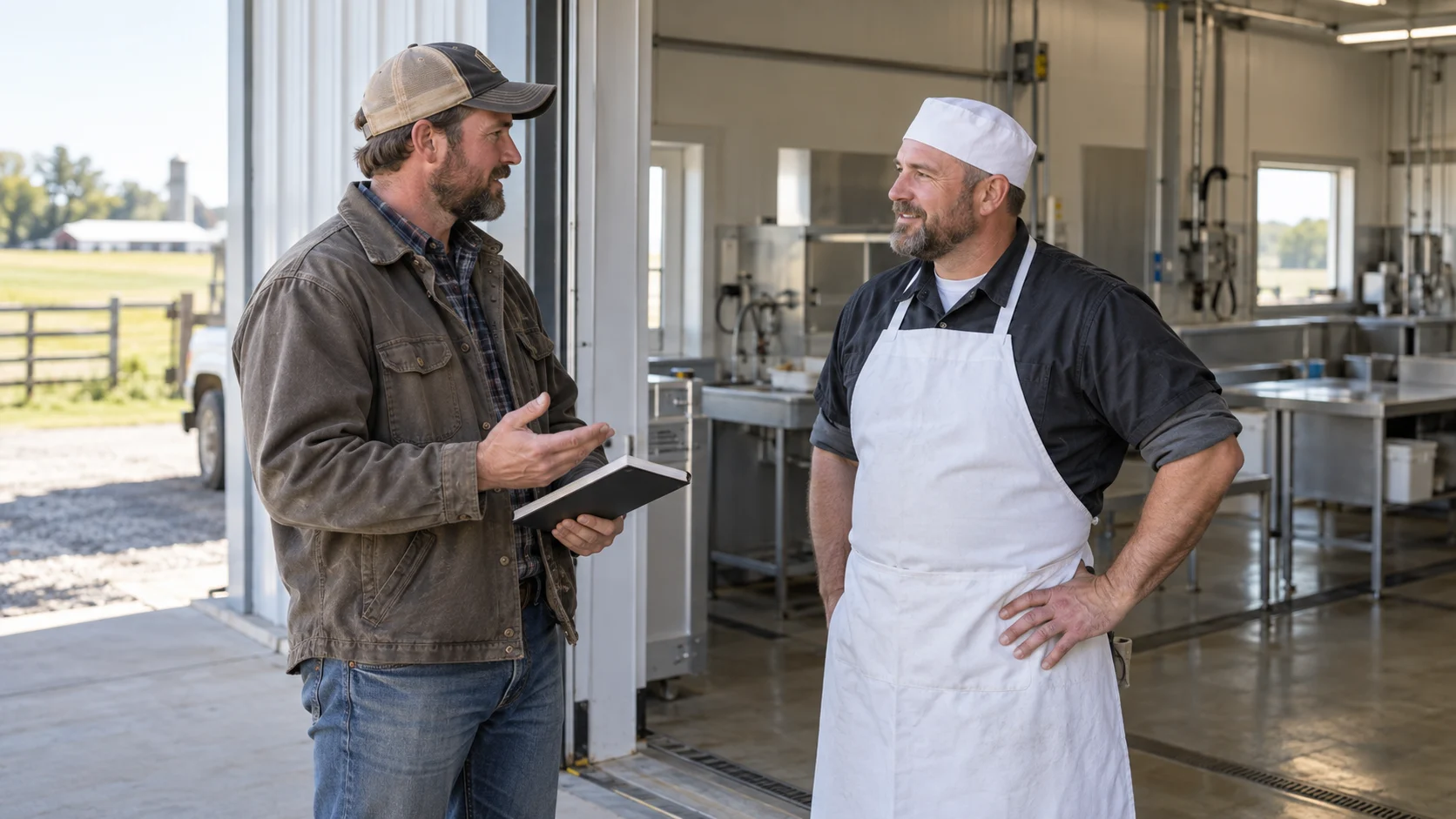
Before arranging processing, tell the butcher what you intend to do with the meat. Feeding your household, selling packaged beef and preparing meals for paying customers are different plans. The service you book needs to fit the one you have in mind.
For a farmer considering a new source of income, that early conversation can shape everything that follows: scheduling, packaging, labels, storage and the offering you eventually put in front of customers.
Understand the service you are booking
Indiana recognizes several inspection arrangements. For beef, this basic comparison helps frame the first conversation; it is not permission for a particular business or product.
| Route | What it means for your plan |
|---|---|
| Indiana state inspection | BOAH inspects the operation and slaughtered animals. Eligible products carry the state inspection mark and can enter commercial channels within Indiana. |
| Federal inspection | USDA FSIS provides inspection. Confirm the establishment and the service booked for your animals. |
| Custom-exempt processing | Meat is returned for the animal owner’s household use and permitted nonpaying guests. It is labeled “Not for Sale.” Facility sanitation oversight still applies. |
BOAH explains these distinctions and links to processor directories. A business may offer different services, so confirm how your particular animals will be handled. Read BOAH’s inspection guide and find its facility list.
If you want processing on your land
Describe the exact location and ask what the processor can lawfully do there. Will the proposed service be inspected or custom-exempt? Which establishment or mobile unit will perform it? What inspection arrangements, site conditions and facilities would be needed?
Treat those as questions to resolve before making the booking. A professional arriving at the farm does not, by itself, establish whether the resulting beef can be sold. Ask for the inspection status and the intended commercial use to be confirmed for that service.
Keep the processor’s answer with the booking details. If a later change moves the work to another location or service, check that the arrangement still fits your plan.
If you want to sell hot meals
The meal introduces another step to evaluate. Federal retail and restaurant exemptions can apply to preparing eligible inspected meat for consumers, but they do not turn custom-exempt beef into saleable food. Read 9 CFR 303.1, paragraphs (a) and (d).
Prepare a short description of the kitchen, menu and service arrangement for the relevant authority. For a farm-dinner idea, our Indiana farm-dinner guide walks through the questions worth settling before taking orders.
Keep poultry rules in their own conversation
Poultry has separate exemptions. BOAH’s August 2026 guidance describes an exemption for producers slaughtering and directly selling fewer than 1,000 birds of their own raising annually, with conditions. It does not establish a comparable exemption for cattle. Read the meat and poultry FAQ.
When asking about an exemption, identify the species, annual quantity, products and intended buyers. Those details help avoid applying a rule for one kind of operation to another.
Leave the call with a usable plan
Before agreeing on a date, make sure you can explain the arrangement back in plain language. You should know what service you are buying, what product you will receive and how it fits the sales you are planning.
- Confirm the processing location, inspection arrangement and records you will receive.
- Agree on cuts, pack sizes and the labeling work included in the price.
- Plan collection and appropriate storage for the quantity you expect.
- Ask what happens if the schedule changes or the expected quantity differs.
That preparation gives the processor a clearer job and gives you a firmer basis for planning the business. When the meat comes back, the next step should already be understood.
Sources checked October 5, 2026. Confirm the current requirements for your species, processing service, product and sales method with the relevant authority.